<prologue>
I started a blog called “The Baby Boomer Generation’s Miscellaneous Blog”(Dankai-sedai no garakutatyou:団塊世代の我楽多(がらくた)帳) in July 2018, about a year before I fully retired. More than six years have passed since then, and the number of articles has increased considerably.
So, in order to make them accessible to people who don’t understand Japanese, I decided to translate my past articles into English and publish them.
It may sound a bit exaggerated, but I would like to make this my life’s work.
It should be noted that haiku and waka (Japanese short fixed form poems) are quite difficult to translate into English, so some parts are written in Japanese.
If you are interested in haiku or waka and would like to know more, please read introductory or specialized books on haiku or waka written in English.
I also write many articles about the Japanese language. I would be happy if these inspire more people to want to learn Japanese.
my blog’s URL:団塊世代の我楽多(がらくた)帳 | 団塊世代が雑学や面白い話を発信しています
my X’s URL:団塊世代の我楽多帳(@historia49)さん / X
Looking back at the history of the behavior of “monks” since Buddhism was introduced to Japan in 538, I believe there is some terrible evidence that could be called a “history of tyranny.”
Japanese Buddhism has three major streams: first, Nara Buddhism, which is the “Nanto Rokushu” consisting of Kegon, Hosso, Sanron, Jojitsu, Kusha, and Ritsu sects; second, Heian Buddhism, which is the two schools of Tendai and Shingon; and finally, Kamakura Buddhism, which is the five schools of Zen, Jodo, Jodo Shinshu, Jishu, and Nichiren.
1. Emperor Shirakawa and the “Sōhei” (soldiers)
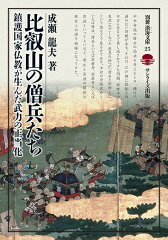
Under the generous protection of the Imperial family, court nobles, and aristocrats, the monks gradually became more and more powerful and arrogant. Armed “sōhei” (soldiers) began to take sacred trees and portable shrines, committing acts of violence and violence, and making strong appeals.
“Nanto” (temples in Nara, mainly Kofuku-ji and Todai-ji) and “Hokurei” (Enryaku-ji Temple on Mount Hiei) were in conflict with each other and repeatedly engaged in a “struggle for power.”
Emperor Shirakawa (1053-1129) lamented, “The water of the Kamo River, the dice of the game of sugoroku, and the yamabushi (warrior monks of Mount Hiei) are three things I cannot control” (three things in the world that do not go my way), in a famous anecdote from the Tale of the Heike.
Taira no Kiyomori (1118-1181) shot arrows at the portable shrine carried by the warrior monks, repelling them.
2. Oda Nobunaga (1534-1582) and the “burning of Mount Hiei”
In 1571, Oda Nobunaga burned down Enryakuji Temple on Mount Hiei. One of the reasons was that it was hiding Azai and Asakura soldiers who had been defeated in the Battle of Anegawa. However, that was not the only reason.
At that time, Enryakuji Temple on Mount Hiei had military power in the form of “soldiers” and boasted influence comparable to that of a Sengoku daimyo. It also had authority in religious terms as the “head temple of the Tendai sect.”
They had become extremely corrupt, setting up checkpoints on their own, collecting “tolls,” and indulging in alcohol and sex. At the time, it was said that “if you harm a monk, you will be punished by Buddha,” and this seems to have spurred them on to do whatever they wanted.
Nobunaga tried to negotiate with Enryaku-ji Temple, offering to return the temple land if they sided with him, but when they refused, Nobunaga went ahead and burned down Mount Hiei.
In this way, Nobunaga was able to force the huge religious power that had even been meddling in politics to submit, separating politics from religion, and seizing the commercial interests that Enryaku-ji Temple had been hindering, thus succeeding in separating religion from commerce.
3. Oda Nobunaga and Ishiyama Honganji
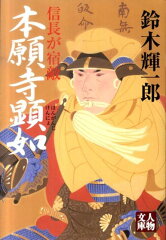
Ishiyama Honganji is a Jodo Shinshu temple that was located in Osaka from the early Sengoku period to the Azuchi-Momoyama period. During the Sengoku period, it was called Ozaka Honganji and Ozaka Castle.
This meant that they could no longer be called a “group of monks” or a “Buddhist temple,” but had transformed into a force more suited to being called a “transformed Sengoku daimyo.” At the time, the city of Osaka was a “temple town” surrounded by defensive moats and earthen walls, with Ishiyama Honganji Temple at its center.
Ishiyama Honganji Temple became the head temple of the Honganji sect in 1533 and continued to develop, becoming a major force in the Warring States period, but after a conflict with Oda Nobunaga (the Battle of Ishiyama), it was surrendered by Kennyo (1543-1592) in 1580 and burned down shortly thereafter. Osaka Castle was built by Toyotomi Hideyoshi on the site of Ishiyama Honganji Temple.