
<prologue>
I started a blog called “The Baby Boomer Generation’s Miscellaneous Blog”(Dankai-sedai no garakutatyou:団塊世代の我楽多(がらくた)帳) in July 2018, about a year before I fully retired. More than six years have passed since then, and the number of articles has increased considerably.
So, in order to make them accessible to people who don’t understand Japanese, I decided to translate my past articles into English and publish them.
It may sound a bit exaggerated, but I would like to make this my life’s work.
It should be noted that haiku and waka (Japanese short fixed form poems) are quite difficult to translate into English, so some parts are written in Japanese.
If you are interested in haiku or waka and would like to know more, please read introductory or specialized books on haiku or waka written in English.
I also write many articles about the Japanese language. I would be happy if these inspire more people to want to learn Japanese.
my blog’s URL:団塊世代の我楽多(がらくた)帳 | 団塊世代が雑学や面白い話を発信しています
my X’s URL:団塊世代の我楽多帳(@historia49)さん / X
With the global pandemic of COVID-19 pneumonia, many people are being forced to refrain from going out and live restrictive lives. Even prominent figures are taking to social media to urge people to “stay home” with the hashtag “#StayHome.”
Furthermore, stores and businesses that have been asked by prefectural governors to “suspend operations” are in a very difficult situation. Service industries such as department stores, restaurants, movie theaters, travel, massage parlors, and beauty salons are struggling in particular. We’ll likely see an increase in “coronavirus bankruptcies.”
However, as the proverb goes, “When the wind blows, the barrel maker makes money,” there are some industries that are experiencing strong sales thanks to “coronavirus demand” and “coronavirus business.” Some stores have even transformed their traditional business models and are experiencing strong sales. Perhaps this is a case of “turning misfortune into fortune.”
However, I’ve recently noticed that “high-priced masks” have been sold in various “stores other than drugstores,” and that “thermometers that are out of stock at drugstores (not subject to the resale ban)” are being sold on flea market apps and online shopping sites for prices far higher than their original price, which is concerning.
I don’t know whether they are purchasing masks from resellers who have been buying up masks, or whether individual businesses are importing them directly from China, but it’s clear that they are being sold at unreasonably high prices. There is also a suspicion that thermometers are being bought up in an attempt to exploit a loophole in the law.
I hope the Japanese government will crack down on these unscrupulous individuals to prevent them from making unfair profits.
I believe that the “Act on Prevention of Hoarding and Hoarding” (officially known as the Act on Emergency Measures Against Hoarding and Hoarding of Daily Necessary Goods, etc.), which was enacted in 1973 in response to the “toilet paper shortage incident” caused by the “oil shock,” should be invoked to crack down on masks, disinfectant, thermometers, toilet paper, and other items.
1. Industries experiencing strong sales due to the “COVID-19 boom”
(1) Supermarkets primarily selling fresh produce
The reason for the strong sales is that people are refraining from going out due to the coronavirus pandemic and cooking at home has led to increased consumption of fresh food.
(2) Drugstore chains selling medical and hygiene products
Demand for masks, disinfectant alcohol, and toilet paper has skyrocketed, making sales extremely strong.
(3) Convenience stores
(4) Delivery services

These include “pizza restaurants that specialize in delivery,” “companies that undertake deliveries from many restaurants” (such as “Uber Eats” and “Demae-can”), “supermarkets that also offer delivery services,” and “restaurants that have started offering delivery services.”
(5) Telework-related businesses

Examples include Zoom Video Communications, the American company that operates the web conferencing service Zoom. Zoom users are said to have increased 20 times since before the COVID-19 pandemic.
Other examples include Microsoft, the American company that operates Skype, and Cisco, the American company that operates Cisco Telework.
(6) Game software retailers

Sales of games such as “Animal Crossing: New Horizons (packaged version)” for Nintendo Switch also appear to be strong. This is due to the fact that many children are spending all day at home due to school closures and requests to refrain from going out.
(7) Online Shopping Sites

This is because, following requests to refrain from going out, more people are purchasing various products via smartphones and computers.
(8) Study book “The Crazy History of Japan Taught by a University of Tokyo Professor”
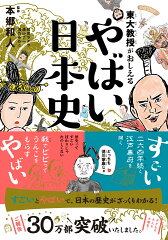
With children and grandchildren spending all day at home due to school closures, many want to give them access to books that will provide them with knowledge, rather than entertainment content like games or YouTube. Sales of “Amazing Japanese History Taught by a University of Tokyo Professor” (author: Kazuto Hongo, publisher: Diamond Inc.) are booming.
This book is a unique history book that unravels historical figures from a unique perspective, highlighting the “amazing” and “amazing” aspects. It’s easy to understand, with explanatory comics that make historical figures feel very familiar.
Sales of “Amazing World History,” a book in the same series, are also increasing.
(9) Online Fitness Video Service
“LEAN BODY” has seen a significant increase in new registered users, nearly doubling the number in the January-March 2020 period compared to the October-December 2019 period.
The company began exclusive streaming of the “Reiwa Version of Billy’s Boot Camp” on April 11. This is a revival of “Billy’s Boot Camp,” which became a big hit about 15 years ago. It seems to be popular among people who are lacking exercise due to working from home.
(10) Bicycle Retailers
There seems to be a special demand for these products, with people using them as an alternative exercise option due to the voluntary closure of sports clubs, and those trying to avoid commuting by train.
(11) Fast Food Chains with a High Takeout Ratio
KFC Holdings Japan, which operates the “Kentucky Fried Chicken” chain, saw its sales increase 108.2% year-on-year in March this year, while MOS Food Services, which operates the “Mos Burger” chain, also performed well, increasing 100.9% year-on-year.
Both companies have a high “takeout ratio,” including delivery, with KFC accounting for 70% and MOS Burger accounting for 60%. This business model, which primarily relies on takeout rather than dine-in dining, has benefited from its favor.
(12) Indoor Exercise Equipment
School closures and other factors have led to a “stay-at-home” trend among the public, leading to a sharp increase in the number of people purchasing fitness equipment through mail order in an effort to “come up with” their lack of exercise.
2. Stores that have shifted their business model and are seeing strong sales
(1) High-end restaurants are shifting to “takeout” and “delivery” services.

Michelin-starred restaurants in the United States are increasingly expanding into the takeout and delivery sectors.
For example, Seattle’s long-established high-end restaurant, Canlis, is currently focusing on meal kits.
In Japan, many establishments, including French restaurants, popular salad shops, hamburger joints, and general eateries, are focusing on takeout sales, even taking reservations.
(2) A mini-supermarket that has transformed from a restaurant-focused business into a food waste reduction store.
This is iiMarket, a mini-supermarket specializing in outlet foods. The secret to its popularity is that all products are about to be disposed of, yet are priced at less than half the usual price. It also seems to attract people interested in food waste and the Sustainable Development Goals (SDGs).
(3) Izakaya Restaurant Transforms into a “Meal Delivery Service for Nursing Homes”
The owner of “Shiawase Ichibancho,” an izakaya restaurant in Aoba Ward, Sendai City, will close his izakaya in April and focus solely on the meal delivery service he began in June of last year during the lunch hours for nursing homes and other facilities.
3. Business Model Transformation Support Project (COVID-19 Countermeasures)
The Tokyo Metropolitan Small and Medium Enterprise Support Center, a public interest incorporated foundation, has established a subsidy program (up to 1 million yen) for small and medium-sized restaurant owners in Tokyo who start new services, such as takeout, delivery, and transportation services, to secure sales.