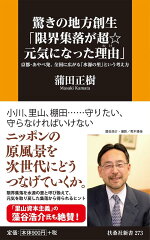
<prologue>
I started a blog called “The Baby Boomer Generation’s Miscellaneous Blog”(Dankai-sedai no garakutatyou:団塊世代の我楽多(がらくた)帳) in July 2018, about a year before I fully retired. More than six years have passed since then, and the number of articles has increased considerably.
So, in order to make them accessible to people who don’t understand Japanese, I decided to translate my past articles into English and publish them.
It may sound a bit exaggerated, but I would like to make this my life’s work.
It should be noted that haiku and waka (Japanese short fixed form poems) are quite difficult to translate into English, so some parts are written in Japanese.
If you are interested in haiku or waka and would like to know more, please read introductory or specialized books on haiku or waka written in English.
I also write many articles about the Japanese language. I would be happy if these inspire more people to want to learn Japanese.
my blog’s URL:団塊世代の我楽多(がらくた)帳 | 団塊世代が雑学や面白い話を発信しています
my X’s URL:団塊世代の我楽多帳(@historia49)さん / X
1. Regional Revitalization
Regional revitalization is a set of policies aimed at correcting the overconcentration of population in Tokyo, halting population decline in regional areas, and increasing the vitality of Japan as a whole.
This is a policy announced by the second Abe cabinet reshuffle in September 2014, and is also known as “Local Abenomics.”
The specific policies are as follows:
(1) New Grants Grants for local comprehensive strategies.
(2) Local relocation of government agencies
(3) Special Zones There are “National Strategic Special Zones,” “Comprehensive Special Zones,” and “Structural Reform Special Zones.”
(4) Support for the use of information and human resources
2. Town revitalization using VR
More and more local governments are trying to use “VR (Virtual Reality)” to promote their local tourism.
(1) Oishida Town, Yamagata Prefecture – Watch the Mogami River Fireworks Festival in VRVR動画で見る「最上川花火大会」
(2) Gyoda City, Saitama Prefecture – VR tourism content “Run away with the princess!”VR観光コンテンツ「姫と逃げろ!」
(3) Tambasasayama City, Hyogo Prefecture – Japan’s first VR telescope日本初「VR望遠鏡」
(4) Onomichi City, Hiroshima Prefecture – World-renowned Cat Street View「キャットストリートビュー」
(5) Okayama Prefecture – Sunny Okayama Destination Campaign「晴れの国おかやまデスティネーションキャンペーン」
(6) Bibai City, Hokkaido – Bibai City Tourism Experience Virtual Reality「美唄市観光体験Virtual Reality」
In addition, Shimonoseki city is currently planning to work with Time Looper, an American VR content production company, to produce a “Shimonoseki History VR Exploration Map” aimed mainly at foreign tourists.
The content will include ① the Battle of Dannoura, ② the duel on Ganryu Island, ③ the Shimonoseki War between the Choshu clan and Europe and the United States, and ④ the four seasons in the castle town of Chofu.
3. Hometown Creation Project
In the past, then Prime Minister Noboru Takeshita proposed something called the “Hometown Creation Project.”
The official name of this project was “Self-thinking, Self-acting Regional Development Project,” and from 1988 to 1989, each city, ward, town, and village was given 100 million yen to use freely for regional development.
However, this policy was implemented during the “bubble era,” and this generous 100 million yen was used to build objets d’art and memorial museums all over Japan. However, many of them were outrageous, and I personally think it was a failure.
These include the Village-run Cabaret (formerly Sennan Town, Akita Prefecture, now Misato Town), the Clay Figurine Station Building (formerly Kizuku Town, Aomori Prefecture, now Tsugaru City), the Dragon Object (formerly Nanatsuka Town, Ishikawa Prefecture, now Kahoku City), the Pure Gold Bonito (Nakatosa Town, Kochi Prefecture), the Statue of Liberty (formerly Momoishi Town, Aomori Prefecture, now Oirase City), and the UFO Village/UFO Experience Center (formerly Iino Town, Fukushima Prefecture, now Fukushima City).
The local governments that received the 100 million yen actively invested in the development of tourist facilities with the aim of revitalizing the local area and promoting economic revitalization. However, they were often criticized as a classic example of waste, as they spent the money haphazardly on the construction and production of buildings and monuments.
On the other hand, some local governments that were unsure of how to use the money turned to using it as a “XXXX fund.”
As a postscript, when Ishiba Shigeru, the first Minister of Regional Revitalization, asked Takeshita Noboru, “Wasn’t the Hometown Revitalization Project a waste of money?” Takeshita reportedly replied, “Ishiba, it’s not. It shows us the wisdom and power of the region.” This story is found in Ishiba’s “Theory of the Creation of the Japanese Archipelago.”
However, this also sounds like Takeshita Noboru’s “excuse for the failure of his policies.”